
Sakanwi Technologies
Home/Case Studies

Client / Project

Trekk Scooters

Mobility / Operations

Trekk Scooters Fleet Operations Platform

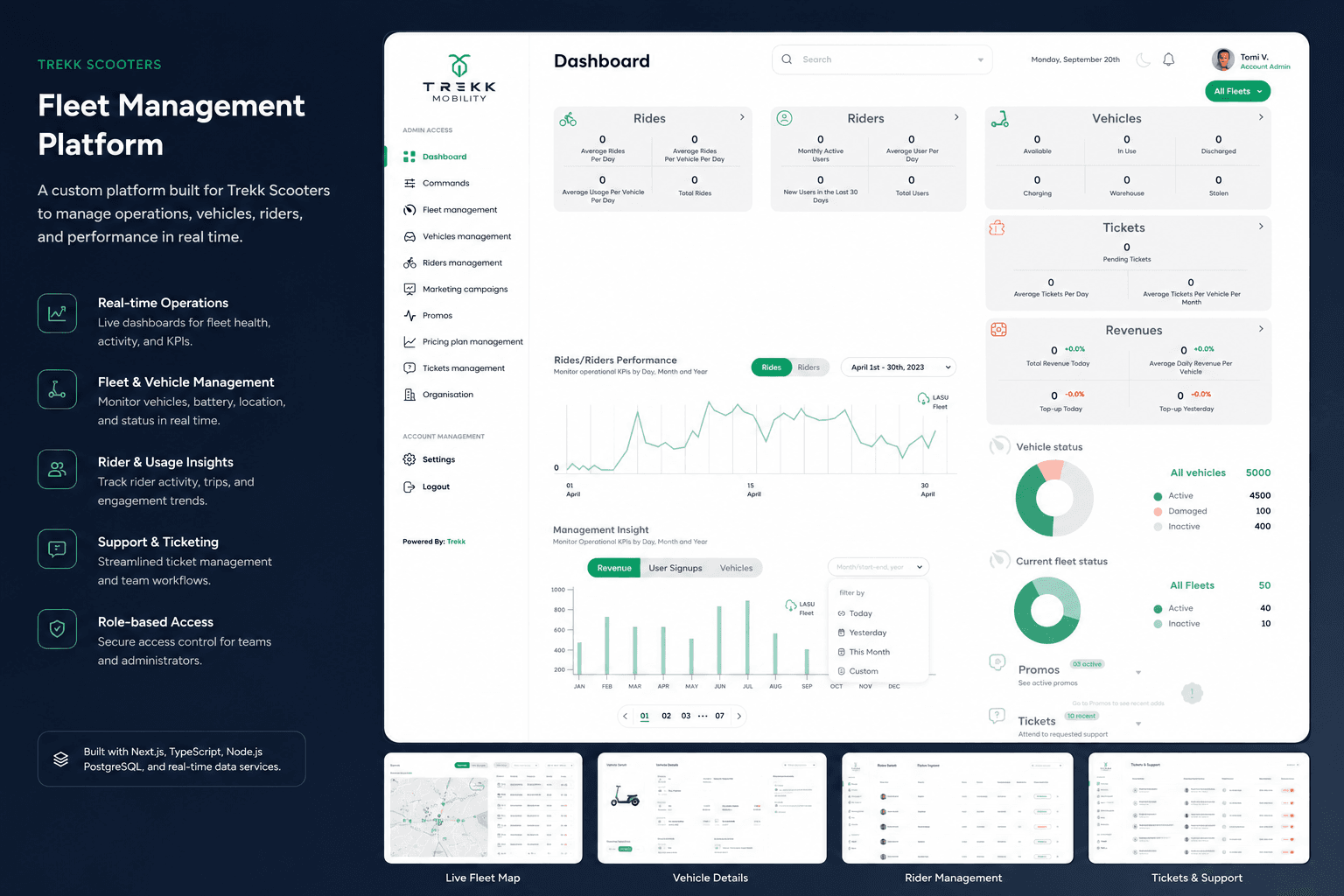
A fleet operations platform for Trekk Scooters, designed to give teams clearer control over vehicles, riders, trips, pricing, support, and daily fleet activity.

Platform Preview

Trekk Scooters fleet management platform dashboard mockup

Business Context

The operating environment behind the platform.

Trekk Scooters operates a shared-mobility fleet where vehicles, connected devices, rider activity, and support cases must stay aligned throughout the day. The platform was shaped as an operational control layer so teams can review fleet status, trace activity, and coordinate day-to-day decisions from one place.

Operational Challenge

Routine operating questions depended on records spread across vehicles, riders, trips, device status, pricing, and support. Teams needed stronger operational visibility so availability checks, failed device commands, and rider journeys did not require manual investigation across separate systems.

Solution

We shaped a single operational control layer for fleet, rider, trip, support, and device workflows. Linked records and dashboards help teams manage vehicles, review rider activity, trace device events, and investigate support cases while leaving room for future modules.

Operational Value

Improves operational visibility across vehicles, riders, trips, and day-to-day fleet activity
Reduces internal coordination friction between operations, support, and management
Helps teams investigate device commands, trip events, and support cases from connected records
Creates a structured foundation for Trekk Scooters' evolving fleet operations
Supports future capabilities such as analytics, wallets, maintenance, and additional device types

Implementation Thinking

Decisions that support useful, maintainable operations.

The implementation approach considers how teams work today, what must remain traceable, and where the platform needs room to grow.

Consideration 01

Model organizations, fleets, vehicles, and devices as distinct entities, giving the platform room to support different operating structures.

Consideration 02

Treat every IoT command, acknowledgement, and device response as a traceable operational event rather than a hidden technical exchange.

Consideration 03

Keep pricing, reservations, and trip lifecycle rules configurable, so operating policies can evolve without rebuilding the core platform.

Consideration 04

Separate role-based workflows for management, operations, and support while preserving one shared operational record.

Platform Scope

Capabilities shaped around the work teams need to do.

The platform scope connects the records, actions, and operational views needed to manage this type of work in one environment.

Organization and fleet management
Vehicle registry and availability status
IoT device assignment and command history
Rider profiles and account activity
Reservations and trip lifecycle tracking
Pricing plans and operational rules
Support tickets linked to riders, vehicles, and trips
Operational dashboards and activity views

Technical Considerations

Architecture and delivery choices behind the platform.

Multi-tenant domain model with clear organization-level data boundaries

PostgreSQL schema for connected operational records and auditable event history

MQTT communication planning for device commands, acknowledgements, and status updates

Role-based permissions for operational, support, and management workflows

API boundaries designed for separate frontend, backend, and IoT integrations

Extensible architecture for new fleet types, operational modules, and reporting needs

Build something similar

Ready to define the right operational platform?

Let's turn your operating needs into a clear first scope and a platform your team can use with confidence.

Book a Call